
Table of Contents
ToggleDemand for portable air conditioning units continue to climb across commercial offices, industrial plants, warehouses, and outdoor events, especially throughout the high-heat climates of Texas and Oklahoma. When permanent HVAC systems fall short or fail entirely, portable cooling delivers fast, targeted relief exactly where it’s needed.
Yet, despite their proven value, misconceptions still cause many facility managers, event planners, and operational leaders to overlook portable cooling or use it incorrectly. These myths lead to wasted energy, poor placement, and missed opportunities to protect people, equipment, and productivity.
In this guide, we break down the five most common myths about portable air conditioning units and explain the truth behind each one, so you can make confident, cost-effective cooling decisions for any space or situation.
What are Portable Air Conditioning Units?
Portable Air Conditioning Units are self-contained, mobile cooling systems that deliver cold air to a specific area without permanent installation. Unlike traditional central HVAC, these units roll into place, plug in, and begin cooling almost immediately, making them ideal for supplemental, temporary, and emergency cooling needs.
How Do Portable Air Conditioning Units Work
Portable Air Conditioning Units cool air much like the system in your home, but in a compact, all-in-one design. Like home portable air conditioners, warm air is drawn over coils filled with chilled refrigerant. That refrigerant is compressed into a hot liquid, and a fan exhausts the resulting warm air out through a flexible duct, often vented outside, into a drop ceiling, or away from the cooled zone. As the unit chills the air, it also pulls out excess moisture, improving comfort in humid environments.
Because the compressor sits inside the unit itself rather than outdoors, a portable AC can be deployed virtually anywhere with proper ventilation and a standard or dedicated power supply.
Common Applications for Temporary Cooling
Portable air conditioning units support a wide range of environments, including:
- Office hot spots the central system can’t reach
- Server rooms, data centers, and electrical panels
- Warehouse packing stations and high-heat production zones
- Medical labs, hospitals, and temperature-sensitive storage units
- Emergency cooling during HVAC breakdowns
- Outdoor events, tents, and temporary structures
Key Benefits of Portable Air Conditioning Units
Portable air conditioning units deliver value that fixed systems can’t match:
- Fast Emergency Cooling: Rapid, around-the-clock deployment when permanent HVAC fails or heat surges.
- Flexible and Portable Design: Units roll into place and reposition easily as needs change.
- No Permanent Installation Required: Avoid construction, downtime, and large capital investment.
- Cost-Effective Temporary Cooling: Target only the zones that need cooling and reduce wasted energy.
- Reliable Performance for Commercial and Industrial Applications: Trusted, world-class units built for demanding environments.
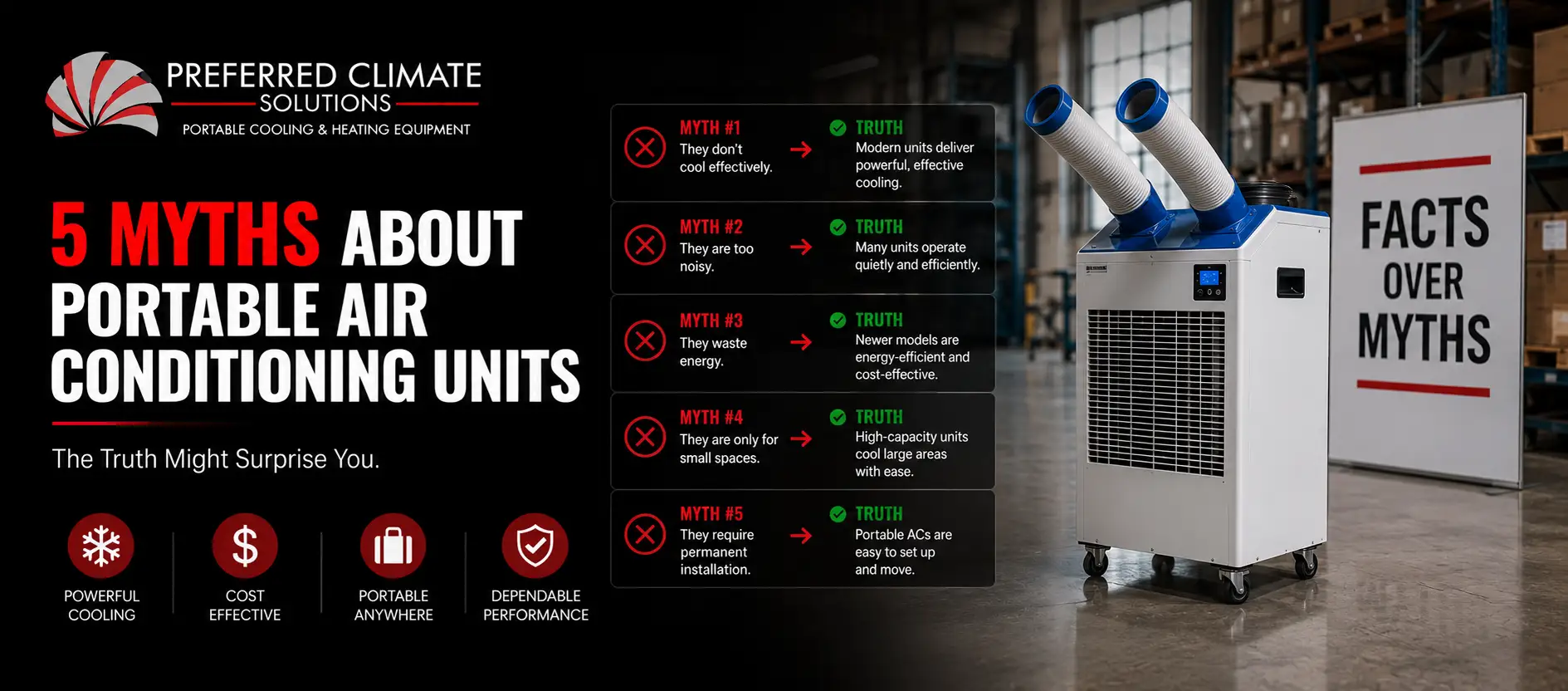
Top 5 Myths About Portable Air Conditioning Units
Myth #1: Turning the Thermostat Lower will Cool the Space Faster
This is one of the most persistent myths about portable air conditioning units, and it simply isn’t true. Setting the thermostat far below your target temperature does not cool a room faster; it only forces the unit to run longer and harder to reach an extreme setting.
How Portable Air Conditioning Units Actually Cool a Room
A portable AC cools at a steady rate determined by its capacity, the room’s heat load, and airflow, not by how low you set the dial. Whether you set it to 68°F or 60°F, the unit produces cold air at the same pace until the space reaches the target. Cranking the thermostat down only means it runs past the point of comfort, wasting energy.
Best Temperature Settings for Efficiency
For most commercial and industrial environments, gradual temperature changes are the most efficient approach. Setting a reasonable target and allowing the unit to maintain it reduces strain and humidity buildup. Many of our units feature digital controls and timers, so you can schedule cooling to ramp up before a shift, an event, or peak occupancy.
Why Extreme Thermostat Adjustments Waste Energy
Pushing the thermostat to extremes increases runtime, energy consumption, and wear on the unit, while sudden drops can also raise humidity in commercial facilities. The smarter strategy is steady, targeted cooling that keeps the space comfortable without overworking the equipment.
Myth #2: Portable Air Conditioning Units are Only for Small Spaces
Many people assume portable air conditioning units are only good for cooling a small room. In reality, portable air conditioners scale from compact offices all the way up to large industrial facilities and open event spaces.
Cooling Offices and Retail Spaces
Portable AC units are ideal for office hot spots, conference rooms, and retail areas where the central system underperforms. A single spot cooler rental can stabilize an uncomfortable zone without modifying existing HVAC infrastructure.
Warehouse and Manufacturing Facility Applications
For larger footprints, warehouse cooling solutions and high-capacity units handle heat-intensive zones such as packing stations, assembly lines, and equipment areas. Our coolers range from 10,000 to 83,000 BTU, cooling spaces as small as 250 sq. ft. up to roughly 2,100 sq. ft. per unit, and multiple units can be combined for broader coverage.
Data Centers, Server Rooms, and Healthcare Facilities
Sensitive environments rely on portable air conditioning units to protect critical assets. Spot coolers keep server racks and electrical panels within safe operating temperatures, while healthcare facilities use them to maintain optimal storage conditions for medical supplies and lab environments.
Large Event and Temporary Structure Cooling
For events and temporary structures, larger ducted systems ranging from 5 ton to 25 ton units deliver powerful, configurable cooling for tents, pavilions, and open venues, proving that portable cooling is far from a small-space-only solution.
Myth #3: Portable Air Conditioning Units Can be Placed Anywhere
While portable air conditioning units are versatile and easy to position, placement still has a major impact on performance. Setting a unit in the wrong spot forces it to work harder, use more energy, and deliver weaker results.
Importance of Proper Placement
Position your unit close to the area that needs cooling, with clear airflow and unobstructed intake and exhaust. Proper placement allows the system to circulate cold air efficiently and reach the target temperature faster.
Ventilation and Exhaust Requirements
Because portable air conditioning units exhaust warm air through a duct, that air needs somewhere to go, outside the building, into a drop ceiling, or away from the cooled zone. Blocked or poorly routed exhaust traps heat and reduces cooling output, so ventilation should be planned before deployment.
Avoiding Direct Sunlight and Heat Sources
Avoid placing units in direct sunlight next to hot windows or beside heat-generating electronics whenever possible. Portable air conditioners run on overtime and consume more energy under these conditions. (One important exception: when a portable AC is intentionally deployed to protect expensive equipment from overheating, the energy cost is minor compared to the price of replacing critical machinery.)
Tips for Maximizing Cooling Performance
- Place units in shaded areas with good airflow
- Keep intake and exhaust paths clear
- Route warm-air ducts outside or into a drop ceiling
- Drain the condensation tank periodically
- Use digital controls to manage temperature and blower speed
Myth #4: Portable Air Conditioning Units are Expensive to Operate
Cost concerns keep many businesses from using portable air conditioning units, but the reality is that targeted portable air conditioners are often far more economical than running or upgrading a full HVAC system.
Comparing Energy Consumption to Traditional HVAC Systems
Cooling an entire facility to comfort just one area wastes significant energy. Portable air conditioning units only cool the space that needs it, reducing the overall load and avoiding the expense of overcooling unused areas.
The Cost Benefits of Targeted Spot Cooling
A spot cooler rental focuses cold air precisely where it’s needed, at a workstation, server rack, or production cell, instead of conditioning the whole building. This targeted approach delivers comfort and equipment protection at a fraction of the cost.
How Portable Cooling Can Reduce Utility Expenses
By supplementing (rather than overworking) permanent HVAC during peak heat, portable cooling helps balance energy demand and can lower utility expenses, while also reducing strain that leads to costly repairs and downtime.
Energy-Efficient Features in Modern Units
Modern portable air conditioning units include energy-saving features such as programmable timers, digital thermostats, variable blower speeds, and remote controls, allowing precise control that keeps operating costs down without sacrificing performance.
Myth #5: Portable Air Conditioning Units Can’t Effectively Cool Outdoor Events
Some assume there’s no realistic cooling option for an outdoor venue. In fact, a large share of what we do is renting portable air conditioning units that duct cool air into event spaces, keeping guests comfortable even in peak summer heat.
Cooling Event Tents and Temporary Structures
Ducted portable units channel conditioned air directly into tents, marquees, and temporary structures. These systems are stackable and configurable, so capacity can be matched to the size and layout of nearly any event space.
Corporate Events, Weddings, and Festivals
From corporate retreats and conferences to weddings and festivals, portable air conditioning units keep attendees comfortable in spaces that have no permanent climate control. The units are quiet, unobtrusive, and bring temperatures down quickly.
Outdoor Sporting Events and Hospitality Areas
Athletic facilities, training camps, and hospitality areas frequently rely on portable cooling during the hot season, particularly venues without built-in HVAC that need reliable temperature control on demand.
Choosing the Right Unit for Outdoor Applications
For outdoor and partially enclosed areas, event-grade units ranging from 5 ton to 25 ton models provide the capacity and airflow required. With onsite delivery and setup available across Texas, the right configuration can be matched to your venue, guest count, and timeline.
How to Choose the Right Portable Air Conditioning Unit
Selecting the right system involves more than picking the biggest unit available. A few key factors ensure reliable performance and cost efficiency.
Determine Cooling Capacity (BTUs)
Cooling capacity is measured in BTUs. Undersized units struggle to keep up, while oversized units waste energy and money. Matching BTU output to the space is the foundation of effective cooling.
Consider Room Size and Heat Load
Square footage is only part of the equation. Ceiling height, occupancy, lighting, sunlight exposure, and heat-generating equipment all add to the total heat load and influence the capacity you need.
Evaluate Ventilation Requirements
Confirm there’s a viable path to exhaust warm air, outside, into a drop ceiling, or away from the cooled zone, and verify the power supply can support the unit without risk of overload.
Understand Rental Duration and Usage Needs
Define whether you need cooling for an emergency, a seasonal spike, a maintenance shutdown, an event, or longer-term support. The duration and usage pattern help determine the most cost-effective rental setup. When in doubt, a no-cost on-site assessment can identify the optimal solution for your space.
Final Thoughts
Portable air conditioning units are a flexible and effective cooling solution for businesses, warehouses, healthcare facilities, industrial sites, and event spaces. Many common myths about portable cooling do not reflect how modern systems perform today. Modern portable air conditioners can cool large spaces, provide emergency cooling during HVAC failures, and deliver targeted temperature control. They offer a cost-effective alternative to permanent installations. Their mobility and quick setup make them ideal for many applications, including temporary air conditioning rental needs.
Choosing the right unit is important. Proper placement and matching the cooling capacity to your space help ensure the best results. Whether you need cooling for seasonal heat, equipment protection, special events, or an HVAC outage, portable cooling systems provide a reliable solution.
At Preferred Climate Solutions, we work closely with businesses to assess cooling challenges and recommend temporary solutions that align with their facility needs, operational goals, and budget. Our experts can help you determine the best approach for maintaining comfort, productivity, and equipment reliability.
Frequently Asked Questions
What are Portable Air Conditioning Units?
Portable air conditioning units are self-contained, mobile cooling systems that deliver cold air to a targeted area without permanent installation. They roll into place, connect to power, and provide fast supplemental, temporary, or emergency cooling.
How much space can a portable air conditioner cool?
It depends on the unit’s capacity. Our spot coolers range from 10,000 to 83,000 BTU and cool areas from about 250 sq. ft. up to roughly 2,100 square feet. For larger or outdoor spaces, 5 ton to 25 ton units can be combined for broader coverage.
Are Portable Air Conditioning Units Energy Efficient?
Yes. By cooling only the space that needs it rather than an entire facility, portable air conditioning units reduce wasted energy. Modern units also include timers, digital thermostats, and variable blower speeds to keep operating costs low.
Can portable air conditioners cool warehouses?
Absolutely. Warehouse cooling solutions use portable and high-capacity units to stabilize high-heat zones such as packing stations, equipment areas, and production lines, without modifying permanent HVAC infrastructure.
How quickly can portable AC units be delivered?
Most portable and rental-based units can be deployed quickly, often the same day, depending on site readiness and power availability. We offer 24/7 delivery and setup across our Texas and Oklahoma service areas.
Can Portable Air Conditioning Units be used for outdoor events?
Yes. Ducted event units duct cool air into tents, temporary structures, and open venues. They’re quiet, configurable, and ideal for corporate events, weddings, festivals, and outdoor sporting venues.