
Table of Contents
ToggleSummer across the U.S.A. puts facilities, warehouses, patios, and job sites to the test. Running a permanent air-conditioning system continuously during prolonged heat can increase energy use and equipment strain.
A swamp cooler rental is a different way to solve the same problem. These units, also called evaporative coolers, cool large volumes of air using water evaporation, a fan, and a pump rather than a compressor-driven refrigerant cycle.
Before you sign off on a swamp cooler rental agreement, it helps to understand how the equipment actually works and what you can do to get the coldest and most efficient performance out of it.
This guide covers what a swamp cooler rental is, how to size one correctly, and the simple adjustments that make the biggest difference in how cold your rented unit runs.
What is a Swamp Cooler Rental?
A swamp cooler is a cooling device that lowers air temperature through water evaporation rather than a refrigerant-based compression cycle. That’s the key difference between a swamp cooler rental and a standard air conditioner rental.
A standard air conditioner is a closed refrigerant system, and a swamp cooler is an open system that relies on a constant supply of fresh and dry air moving through wet pads.
As water evaporates inside the unit, the highest-energy water particles leave first, which pulls heat out of the surrounding air and drops the temperature. The same principle is behind a damp cloth feeling cool against your forehead on a hot day. In dry climates, that simple evaporation process can knock 20° or more the incoming air temperature.
A swamp cooler and an evaporative cooler are the same piece of equipment. ‘Swamp cooler’ is just the common name for what’s technically called an evaporative window cooler, so whether your project calls for a swamp cooler rental or a swamp fan rental, you’re looking at the same category of equipment, just sized differently for the space.
Our evaporative cooler rental lineup covers everything from single room units to full warehouse deployments, so you can match capacity to the job without over or under renting.
Parts of a Rented Swamp Cooler
Knowing the basic anatomy of the unit makes it much easier to keep a rented swamp cooler running cold. Most of these parts are maintained by the rental provider, and rental-grade brands like Portacool coolers are built specifically to hold up to that duty cycle, but a facility manager or job site supervisor who understands them can spot problems early.
Hose Connection or Manual Water Fill
Some rental units connect directly to a water supply line for continuous operation, which is common on units set up for outdoor or extended job site use. Others use a manual fill for shorter deployments where a hose hookup isn’t practical.
Float
The float assembly monitors water level and helps regulate the incoming water supply. Its exact location and configuration vary by model. A stuck float is one of the most common reasons a swamp cooler rental stops cooling properly or starts to overflow.
Pump
The pump moves water from the cooler’s tank to the top of the evaporative pads, where it spreads the water evenly across their surface. Keeping the pads consistently wet allows warm air to pass through them and evaporate the water, removing heat from the air and producing the cooling effect.
Evaporative Pads
These pads are where the actual cooling happens. The wet media may capture some larger dust and debris, but evaporative pads should not be treated as high-efficiency air filters.
Blower and Motor
The blower and motor draw warm air into the unit and push the cooled and humidified air back out into the space. On rental-grade units, these components are sized to move much larger volumes of air than a residential unit.
How a Swamp Cooler Rental Works
A swamp cooler uses water evaporation and airflow to cool the surrounding air. The process is simple: water wets the evaporative pads, warm air passes through them, and the resulting cooled air is pushed into space.
1. Water Enters the Tank
Depending on the model, the water supply fills the reservoir until the float or water-control system reaches the appropriate level.
2. The Pump Wets the Evaporative Pads
The pump draws water from the tank and distributes it across the evaporative pads, keeping them saturated for consistent cooling.
3. Warm Air Passes Through the Pads
The blower motor pulls hot and dry air through the wet pads. As the water evaporates, it pulls heat out of the passing air, the same way a fan blowing across sweat-dampened skin feels cooler.
4. The Blower Pushes Cooled Air Out
The now-cooled and humidified air is forced out through the unit’s ductwork or discharge vents and into the space you’re cooling.
Choosing the Right Size Swamp Cooler Rental
Unlike air conditioners, which are rated in BTUs, evaporative coolers are rated in CFM, or cubic feet per minute, the volume of air the unit can move. Getting the CFM rating right is the single biggest factor in how cold and efficient a rented unit will feel.
A widely used starting formula is:
Square footage x Ceiling Height / 2.
That calculation gives you the approximate CFM needed for the space, assuming standard 8ft. ceilings and a reasonably dry climate. Taller ceilings, higher humidity, or heavy sun exposure all push that number higher.
| Space Size (approx.) | Typical CFM Needed |
|---|---|
| Small Office or Booth (up to 300 sq. ft.) | 2,000 – 3,000 CFM |
| Mid-Size Shop or Retail Floor (300 – 1,000 sq. ft.) | 3,000 – 6,000 CFM |
| Warehouse Bay or Production Area (1,000 – 5,000 sq. ft.) | 8,000 – 18,000 CFM |
| Large Warehouse or Open Event Space (5,000+ sq. ft.) | 18,000+ CFM, or multiple units |
These figures are a starting point for budgeting, not a substitute for a proper site assessment. A rental provider will also factor in ceiling height, insulation, humidity levels, and how much fresh-air exhaust the space allows, since evaporative cooling only works well when hot and humid air has somewhere to go.
For a deeper look at sizing equipment for large industrial spaces, see our guide on how efficient swamp coolers are for warehouse spaces.
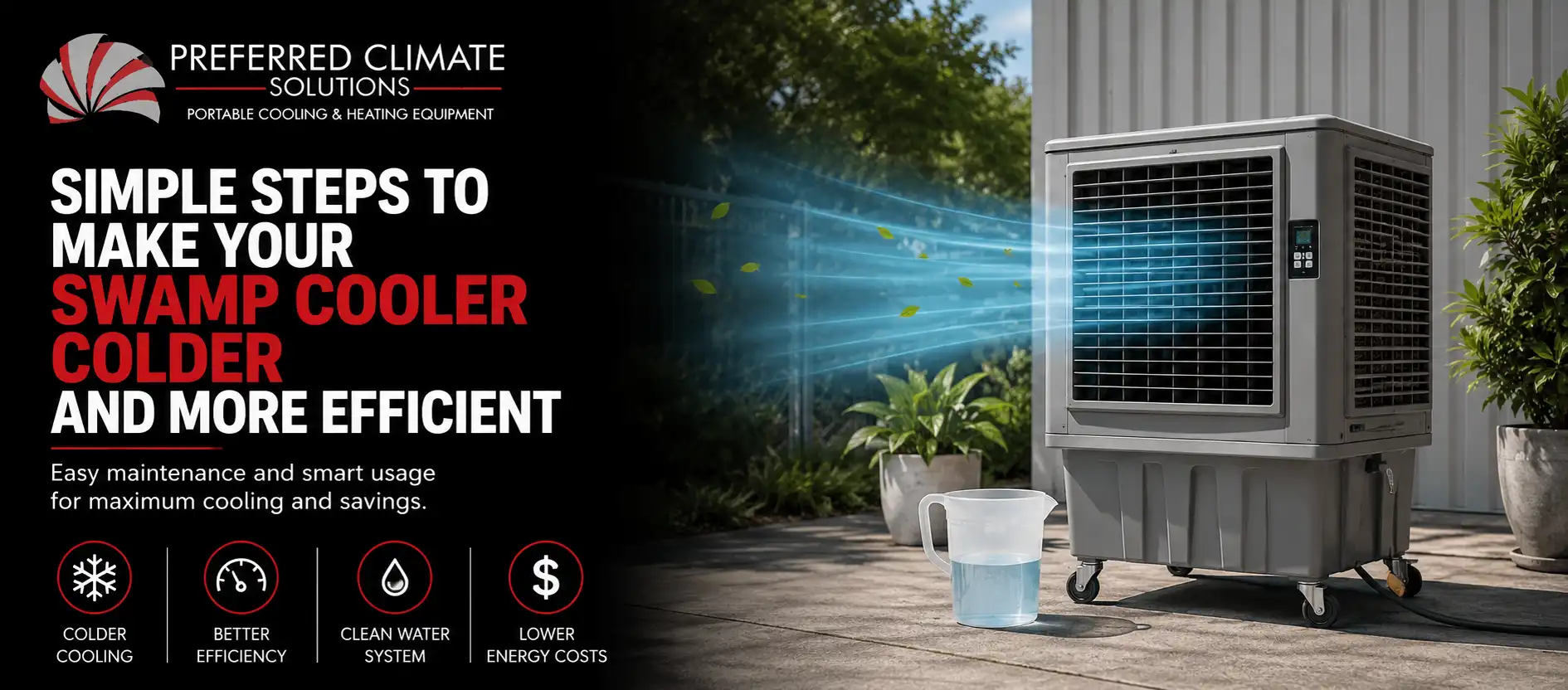
Simple Tips to Make Your Swamp Cooler Rental Colder and More Efficient
A correctly sized swamp cooler rental is already an energy-efficient way to cool a large and open space. These adjustments help you get the coldest possible output from it, and pair well with broader tips on improving swamp cooler efficiency.
Open Windows and Vents
Evaporative coolers depend on a steady flow of fresh air in and humid air out. Provide a clear outlet for warm and humid air through doors, louvers, vents, or other appropriate openings.
Add a Dehumidifier for Humid Conditions
If the space can’t be vented well, or the outdoor air is already humid, pairing a dehumidifier with your rented unit pulls excess moisture from the air before it reaches the pads. Drier incoming air evaporates faster, which means a colder output.
Reduce Indoor Moisture Where You Can
Anything that adds humidity to the space, such as standing water, wet processes, or poor drainage, works against the cooler. Addressing those sources helps the unit evaporate more efficiently and keeps the space from feeling muggy.
Size the Unit Correctly from the Start
It’s tempting to save on rental cost by going smaller, but an undersized unit works harder for less cooling. If the estimated requirement falls between unit sizes, confirm the site conditions and airflow plan with the rental provider. The right placement and number of units may matter more than simply selecting the largest available model.
Keep up with Routine Maintenance
Rental providers typically handle major service, but a few basic checks during a longer deployment keep the unit performing at its best:
- Check that the evaporative pads stay evenly saturated
- Watch for mineral buildup on the pads in hard-water areas
- Make sure the float valve is shutting off water properly
- Keep the intake area clear of dust, debris, and obstructions
- Flag any unusual noise from the pump, blower, or motor to your rental provider
Allow the pads to become fully saturated according to the manufacturer’s or rental provider’s startup instructions before relying on full evaporation performance.
Swamp Cooler Rental vs. Buying: When Renting Makes Sense
Not every cooling need requires purchasing equipment. Renting can be a practical choice when you need temporary cooling, flexibility, or a lower upfront investment.
| Consideration | Swamp Cooler Rental | Buying a Swamp Cooler |
| Best For | Short-term projects, seasonal needs, temporary events, or emergency cooling | Long-term or recurring cooling needs |
| Upfront Cost | Lower initial investment since you pay for the equipment only during the rental period | Higher initial investment to purchase the equipment |
| Equipment Flexibility | Choose the size and capacity needed for each project | Limited to the equipment you own |
| Maintenance | Routine servicing and repairs may be handled by the rental provider | Owner is responsible for maintenance and repairs |
| Scalability | Add or change units as cooling requirements change | Expansion requires purchasing additional equipment |
| Storage | No long-term storage required after the rental ends | Requires adequate space to store the equipment when not in use |
| Temporary HVAC Replacement | Useful while permanent HVAC equipment is being repaired or replaced | May not be practical if the need is only temporary |
| Long-Term Value | Cost-effective when equipment is needed occasionally or for a limited period | Can be more economical when equipment is used frequently over many years |
For temporary or changing cooling requirements, renting provides the flexibility to match equipment to the space without taking on the cost and responsibility of ownership.
If you are still comparing your options, our guide on what to know before renting a portable evaporative cooler covers additional factors to consider.
Swamp Fan Rental for Outdoor Events and Job Sites
Not every cooling need is indoors. A swamp fan rental, like our Power Breezer fan rentals, is essentially a large and portable evaporative cooling fan, and it’s a common choice for outdoor events, construction sites, loading docks, and any open-air space where a traditional AC unit isn’t practical.
Because these units don’t rely on a sealed duct system, a swamp fan rental can be positioned and repositioned as the crowd, crew, or work area shifts throughout the day. They’re a popular fit for festivals, sporting events, warehouses with open bay doors, and construction sites without permanent power or HVAC infrastructure in place yet, which is part of why evaporative cooler rentals work so well for outdoor gatherings.
Why Rent an Evaporative Cooler from Preferred Climate Solutions
Getting the right cooling capacity involves more than choosing a unit based on size alone. Factors such as the space, ceiling height, humidity, ventilation, and how the area will be used all affect cooling performance.
Preferred Climate Solutions can help evaluate these factors and recommend equipment that fits your specific cooling needs. With 24/7 emergency cooling rental support and fast delivery, you can get temporary cooling when you need it most.
For shop floors, warehouses, job sites, and outdoor events, the right equipment can provide consistent airflow without over or under-sizing the system.
If you’re ready to rent an evaporative cooler for your next project, contact our team today, and we’ll help you find the right fit for your space and budget.
Frequently Asked Questions (FAQs)
How is a swamp cooler rental different from an AC rental?
A swamp cooler rental cools air through water evaporation and works best in dry climates, while a standard AC rental uses a refrigerant-based system that works in any humidity level. Evaporative units use less energy but need fresh-air ventilation to perform well.
What size swamp cooler rental do I need?
A common starting formula is square footage multiplied by ceiling height, divided by two, which gives an approximate CFM requirement. A rental provider will refine that estimate based on humidity, insulation, and how the space is ventilated.
Is a commercial evaporative cooler rental effective in humid climates?
Evaporative cooling is most effective in hot and dry conditions. In consistently humid climates, performance drops off, so it’s worth discussing your local climate with your rental provider before booking.
Can I rent an evaporative cooler for outdoor use?
Yes. Many evaporative units, including swamp fan rental models, are built specifically for outdoor and semi-outdoor use at job sites, events, loading docks, and construction areas.
How do I make my swamp cooler rental colder?
Open a window or vent on the opposite side of the space to let humid air escape, keep the incoming air as dry as possible, prime the pads before startup, and make sure the unit is sized correctly for the square footage.
Do I need to maintain the unit myself during the rental period?
Most providers handle major maintenance, but keeping the intake clear of debris and flagging any unusual noise or reduced airflow helps the unit perform consistently throughout the rental.
How quickly can a swamp cooler rental be delivered?
Delivery timelines depend on the provider and unit availability, but many rental companies, including Preferred Climate Solutions, offer expedited and emergency delivery when a space needs cooling right away.
What information do I need to request a swamp cooler rental quote?
Provide the space’s square footage, ceiling height, indoor or outdoor use, rental duration, location, and available power supply. This helps the provider size and deliver the right equipment the first time.
Why is my swamp cooler blowing air but not cooling well?
Your swamp cooler may not be cooling well because of high humidity, dry or improperly saturated pads, poor ventilation, blocked airflow, or an undersized unit.
Do swamp coolers need open windows or doors?
Yes. Swamp coolers need fresh air to enter and warm, humid air to escape. Opening windows, doors, or vents helps the unit cool more effectively.